
Polk County Arrest Warrants Explained
An arrest warrant lets an officer take a person into custody and bring them before a judge. In Minnesota, only a judge signs that order, and the warrant belongs to one case file. People often mix up the papers. A citation, a police incident number, and a complaint are each something else entirely. Polk County readers should match the exact term to what the court record says, not to what a docket summary implies. Where do you look it up? The Polk County Sheriff's Office publishes no public warrant roster and no search page. The case file at District Court, with help from Court Administration, remains the reliable route for confirming an arrest warrant.
Polk County Warrant Complaint Basics
Every Polk County warrant case starts on paper. Under Rule 3.01, the prosecutor files a complaint with supporting documents, and those papers must establish probable cause. The court then picks between two paths. A summons is the default. A warrant comes out only when the filing shows a substantial likelihood the person will not respond, the location is unknown, or an arrest is needed to prevent imminent harm. An affidavit, a police report, or witness statements can carry that showing. The judge reads it before signing anything. Keep the two steps separate in your head: a case can sit in the system for months with no warrant at all, because charging and warrant issuance are distinct events in Polk County court records.
Inside a Polk County Arrest Warrant
A rule fixes what a Polk County arrest warrant must contain. That makes the document readable to anyone who pulls the court record.
| Court and file number | Polk County District Court, with identifiers patterned like 00-CR-00-0000 |
|---|---|
| Defendant | The person's name or a description sufficient to identify them |
| Offense | The charge the complaint or indictment supports |
| Probable-cause basis | The complaint, affidavit, or indictment reference behind the finding |
| Bail or conditions | Set case by case, and never assumed from the charge alone |
| Command and signature | The arrest and appearance command, signed by the issuing judge |
| Execution and return | Service details and later appearance events when they are public |
Rule 3.02 lists the core fields, and Rule 19.02 covers the indictment version.
Polk County Rule 19 Indictments
Complaints are not the only road to an arrest warrant. When a Polk County grand jury returns an indictment, process issues under Rule 19 instead. The warrant names the defendant and the offense, commands arrest and appearance, and references bail or conditions. Both charging paths end the same way: a signed court order tied to a file number, sitting in the case record. What differs is which route the file shows. Minnesota Rule of Criminal Procedure 19 spells out the indictment language the rule requires.
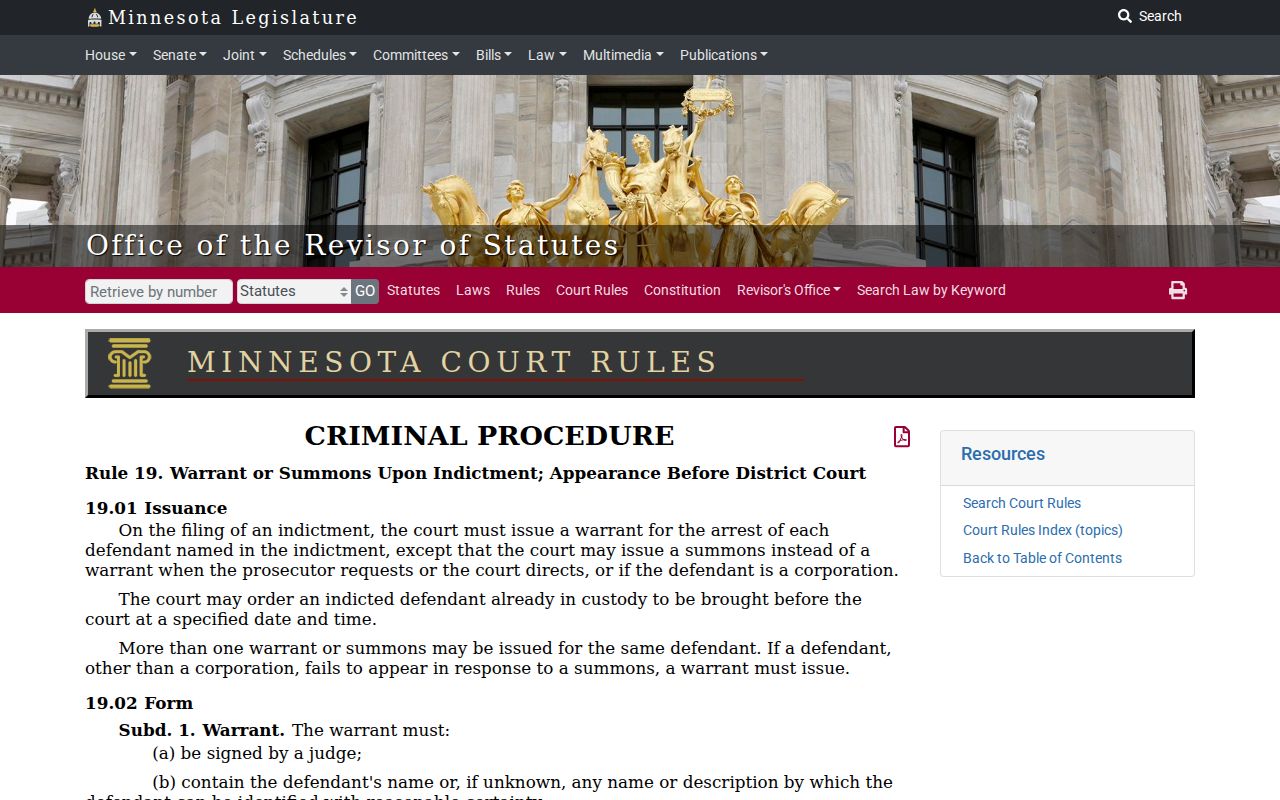
Reading the rule pays off. It helps you tell which charging path a Polk County case followed before you read anything into a docket label.
Serving Arrest Warrants in Polk County
Serving a warrant is enforcement work. The Polk County Sheriff's Office, city police departments, and other authorized officers can execute one within their authority. Under Rule 3.03, execution is allowed anywhere in Minnesota. The rule also limits the timing of a misdemeanor arrest and requires notice plus certification of execution.
Polk County Sheriff's Office
600 Bruce Street, Crookston, MN 56716
218-281-0431
Records: PCSORecords@polkcountymn.gov
City police departments
East Grand Forks, Crookston, and Fosston publish department contacts. Local citations and incidents stay with the issuing city.
The court issues the order. The agency carries it out. A Polk County department can hold the incident record while the court keeps its own case file.
Prompt Appearance After a Polk Warrant
After an arrest, the clock starts running. Rule 3.03 requires that the person be brought promptly before the court. If court is not in session, the deadline is no later than 36 hours after arrest, or as soon as a judge is available. From that first appearance, the case moves on to bail or conditions, counsel, and scheduling. The Minnesota Courts criminal-help page notes that a person may be taken into custody after a Polk County warrant is served. Getting legal help early is its advice, and it is sound.
Comparing Arrest, Summons, and Bench Warrants
Arrest, summons, and bench warrants are three different Polk County court processes that can touch the same person.
| Process | How It Starts | What It Means |
|---|---|---|
| Summons | Complaint filed, with the court choosing notice over arrest | A court date, with no arrest order attached |
| Arrest warrant | Complaint and probable cause, or an indictment under Rule 19 | Authority to arrest and bring the person before a judge |
| Bench or FTA warrant | A missed appearance or broken condition in an existing case | Court process to restore the case to the calendar |
Minnesota also allows a fourth route. A sign-and-release warrant relies on notice and a fresh court date instead of an arrest command. The Polk County bench warrant page explains that process in more detail.
Polk County Arrest-Warrant Index Secrecy
Why would a live Polk County arrest warrant stay out of public view? Minn. Stat. §13.82, subd. 19 holds the answer. Entries in an arrest-warrant index remain confidential until the defendant is arrested, served, or appears in court. An agency can still release the data early when it decides a public purpose is served. The rule does not lock every warrant away, nor does it make them all public. Ask the agency to classify the record and release any public portions.
If There's an Arrest Warrant for You
Call a lawyer before anything else. An attorney can read the Polk County case file, explain what the court will likely require, and arrange an appearance or a motion you can plan around. Minnesota Courts warns that showing up in person can land you in custody.
Important: Do not wait for a traffic stop to settle it. Call a lawyer, then call Court Administration at 218-281-2332 for the case status.
How a Polk County warrant gets resolved depends on the case. Options include a voluntary appearance, bail or bond, a motion to recall or quash, and later court orders. Bail is money held under a judge's order; a bond is a company's guarantee that carries a fee and possible collateral. The Polk County warrant records home page walks through each resolving step, including what to confirm before you appear.
Federal Warrants and Polk County Cases
A federal warrant lives outside Minnesota's state courts, so no Polk County warrant search will surface one. The same goes for any state-level warrant lookup. Federal cases in the area belong to the District of Minnesota. Its website lists courthouse details, including a Fergus Falls location open on weekdays.
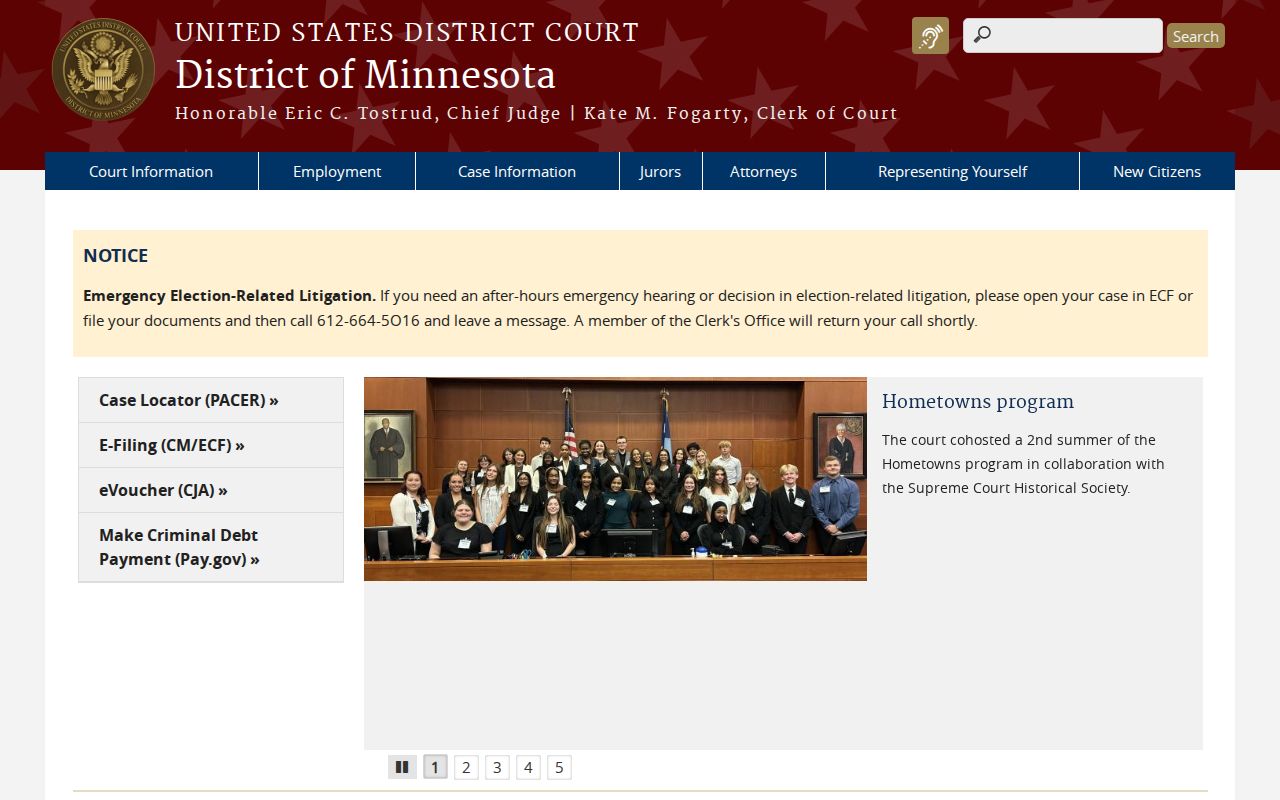
Federal matters leave the Polk County courthouse behind. A state case number gets you nowhere there, so bring the federal case reference or go through counsel. The court's own page points each question to the right building and division. Fees run through PACER pricing: $0.10 per page for most documents, capped at $3.00 per document, with opinions free and a quarterly waiver whenever charges total $30 or less.
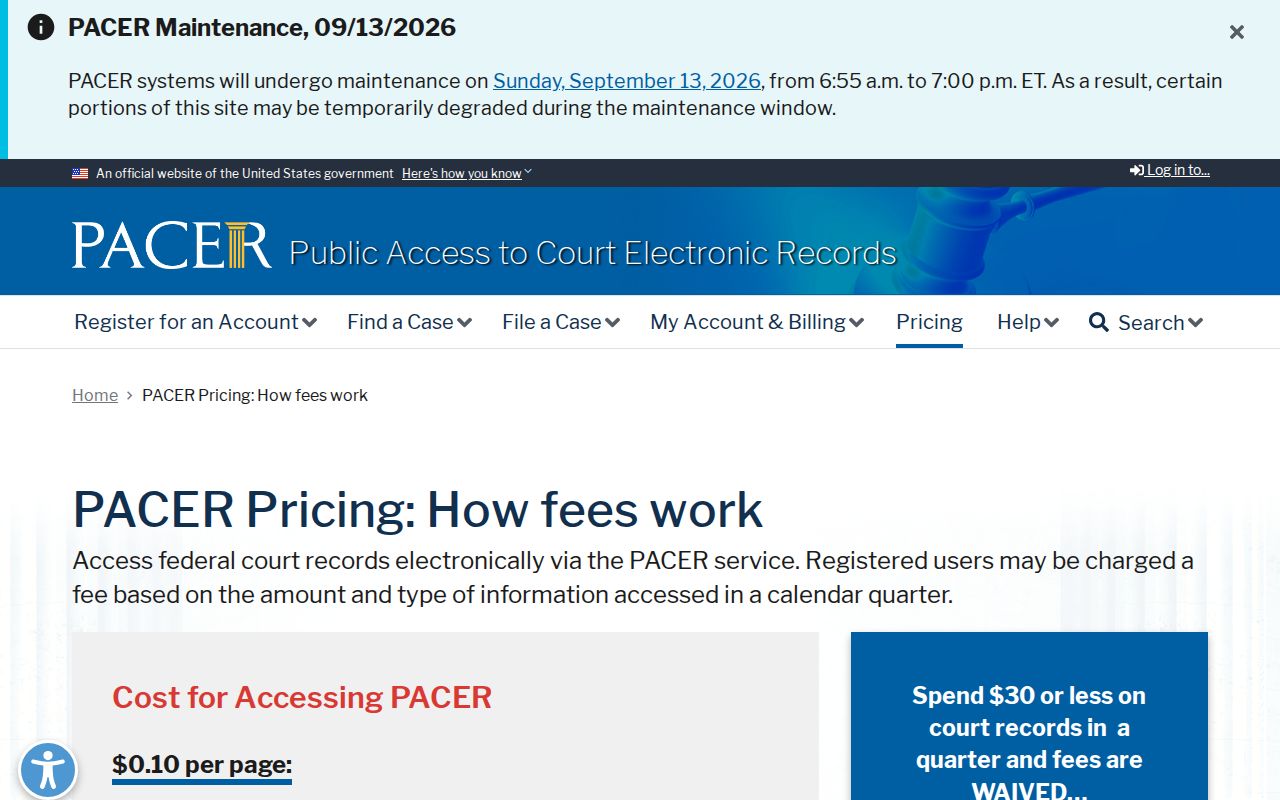
Federal dockets can be sealed, so a blank search proves nothing. Confirm any Polk County federal question with the federal court or with counsel.